
Impact of Assimilation on Intergenerational Dissonance and Relationships Within Asian Immigrant Families.
My visual essay will discuss the generational conflict that emerges between second-generation Asian-Americans and their parents over pressures to assimilate to host-country norms as opposed to attaining traditional practices. Specifically in regard to religion, language, and customs. This research question relates to the themes represented in The Big Sick (2017), where the main character faces cultural conflicts between his parents’ expectations of his adult life and what he actually wants¹. For instance, although his parents had arranged a marriage for him with a Muslim, Pakistani woman who understood their unique cultural values (like his brother did), he rejected the proposal in favor of his White American love interest².
Kamil Nanjiani’s on-screen parents in The Big Sick talking with Nanjiani and his on-screen brother³
Key Concepts
-
When someone of a different ethnicity integrates themselves within the predominant people and culture of the society they live in. Assimilation includes the minority ethnic group embracing traits of the dominant culture to the point where they are relatively indistinct from the predominant group of the society⁴.
-
When children of immigrants, or immigrants themselves, maintain the same cultural practices and values originating from their own unique upbringing, especially at the expense of adhering to the dominant culture of their new society⁵.
-
When children of immigrants are equally socialized by their traditional culture and the dominant culture of the society in which they live, exhibiting qualities of both backgrounds⁶.
Research has long focused on the subject of second-generation Asian-Americans and the effects that host-country society has on the various aspects of their ethnic identity⁷. When discussing the effects of parental impact, specifically, the parent-child relationship between immigrant parents and their children changes as a result of Western influence⁸. Challenges can arise due to the vast cultural differences present between their home and host countries, resulting in familial disputes that could have lasting impacts on parent-child relationships.⁹ Generational conflict often emerges over attainment to religion, when children might show more adherence to host-society religion rather than the faith that their parents grew up practicing or show disinterest in traditional beliefs altogether¹⁰. Immigrant children may also struggle to attain their traditional languages, leading to tension with their parents and extended family due to the subsequent communication barriers that could emerge¹¹. Immigrant children may also feel disconnected from their parent’s cultural customs (such as greetings and celebrations), or development a lack of understanding due to being immersed in a completely different sociocultural state¹². By using 5 media objects , I will explore how adherence versus non-adherence to cultural values affects the well-being of second-generation Asian-Americans and parent-child relationships. Although non-adherence may appear to be beneficial for assimilation, and therefore better well-being in the host-country setting, research suggests that adherence to cultural values has its own benefits as well¹³. This thesis connects and supports our group work on The Big Sick since the film’s feature character faces similar dilemmas, navigating the balance between his own happiness and the culture and relationship he has with his first-generation Pakistani parents¹⁴.
MEDIA OBJECTS
MEDIA OBJECTS
I went about choosing my media objects by focusing on mass media that touched on subjects related to coming-of-age experiences and the experiences of immigrant children throughout adulthood. Through these methods, I discovered five sources that showcased the cultural dichotomies experienced by immigrant parents and their children. These sources reference conflict in terms of religion, language, and customs, and show various aspects of the parent-child relationship from different perspectives. By using the external sources gathered, while also incorporating concepts discussed during class, I discussed the significance of each source and analyzed its relation to current literature. These media objects will visually chronicle the main ideas that are introduced from my thesis and represent real-world examples of how these key concepts are displayed in society. My sources primarily focus on instances where the Asian-American protagonists reflect on their life experiences, and specifically showcase qualities of strong Asian-American identity and/or positive outcomes of bicultural socialization.
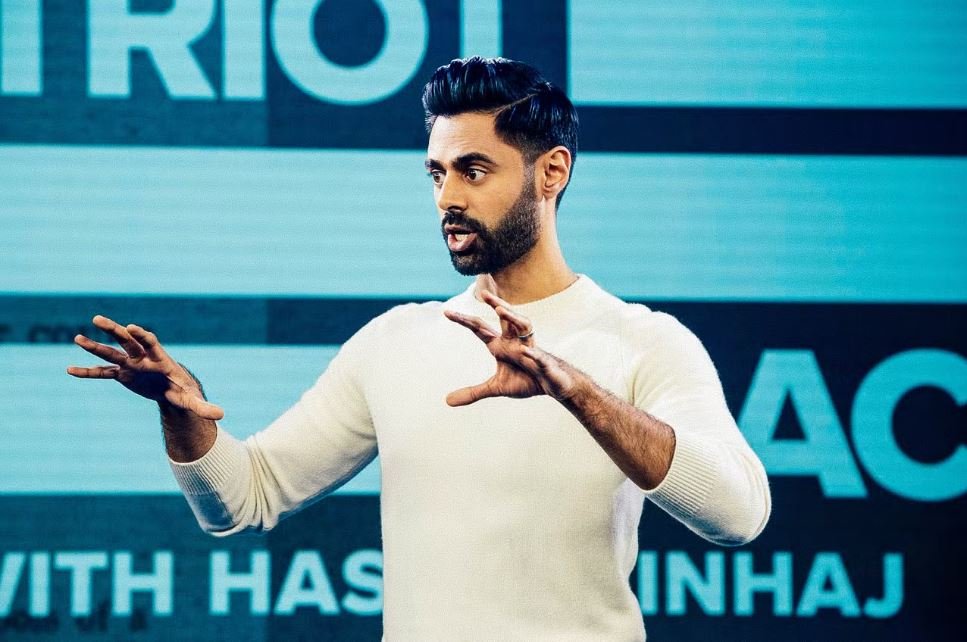

Hasan Minhaj talking about his experience growing up Indian American on his Netflix show, Patriot Act¹⁵
Jon M. Chu, director of Crazy Rich Asians (2018)¹⁶

Never Have I Ever
-
Never Have I Ever follows the story of Devi, a 15-year-old Indian American girl from Sherman Oaks, California, as she goes through various trials and tribulations during high school¹⁷. Apart from the typical friend and boy-related drama, she must also navigate her mother’s strict academic and cultural expectations, all in the midst of her dad’s sudden death and the arrival of her live-in cousin, Kamala¹⁸. As Devi’s relationship with her mother, Nalini, become strained, Nalini believes that Kamala, a post-graduate STEM research student who welcomes the marriage to a man back in India being arranged for her, will be a good influence for Devi’s future¹⁹.
-
Intergenerational dissonance occurs most often when children acculturate faster than their parents²⁰. For adolescents like Devi, who frequent social and school environments that can fuel the differential acculturation between parents and their children, this can bypass the need to conform to parental authority²¹. This is exemplified by Devi’s disregard of Nalini’s rules and preferences – including dating 2 boys at once, getting her nose pierced, and sneaking out at night – which Nalini views as extreme forms of “acting out”²². However, immigrant children may view these behaviors as assimilatory and as attempts to achieve social stability amongst the general population²³. This is inherent in Devi’s views towards Kamala (who she views as a “typical Indian nerd”) and their traditional Hindu holidays (that she claims are boring and outdated)²⁴. All of these instances connect back to Never Have I Ever’s main plotline, as Devi commonly struggles to find a social balance that does not end in trauma, failure, and heartbreak, which he often feels is disrupted by various aspects of her ethnic background²⁵.
-
These scenes capture the strain in immigrant parent-child relationships resulting from Devi’s assimilation into the culture of the United States in comparison to her mother’s preference of adherence to the traditions that she grew up with. This is similar to The Big Sick, in which Kamil Nanjiani’s relationship with his parents becomes strained due to his assimilation towards American values and practices (such as living for oneself, multicultural relationships, etc.) and non-adherence to his parent’s preferences and traditional ways of life²⁶. Both characters recognize and appreciate their unique ethnic heritage, but struggle with growing up in a dominant culture that does share the same expectations that their immigrant parents stress onto them. Especially when the parents in both instances argue that their immigration stemmed from wanting to provide better opportunity for their children, stress can be created if they feel like simple requests for adherence cannot be maintained.
Devi, Kamala, and Nalini attend a local cultural festival in light of a cultural holiday²⁴
¹⁷
Dustin Vuong - Growing Up Asian
-
Dustin Vuong is an Asian-American YouTuber of Chinese and Vietnamese heritage who posts videos about song covers, vlogs, and film content on his channel²⁸. In this particular video, Vuong touches on subjects ranging from his own personal experience growing up Asian-American, to the lack of Asian representation in mass media, and the normalization of racism towards Asian people²⁹. Specifically, he discusses the intergenerational dissonance present between himself and his parents, and the lack of adherence he had towards certain aspects of his background (such as being able to speak Vietnamese)³⁰.
-
Acculturation commonly occurs in the lives of immigrant children like Vuong, due to them being exposed to the values of the host-society on a daily basis³¹. In Vuong’s case, the language barrier that is present between himself and the rest of his family contributes to his feelings of feeling “Americanized” and “whitewashed”³². This exemplifies the concept of assimilation – in which the predominant culture tells immigrants that they should water down their unique characteristics in order to achieve stability and success amongst the general population³³. He further talks about the cultural disconnect that he feels he has grown into, specifically when talking about his parents’ upbringing in comparison to his own³⁴. He states that he commonly received lectures about his parents’ journeys of long walks just to get to school every day, in comparison to himself, who takes simply the bus or drives himself (especially in response to his inability to do a simple task)³⁵. While one might argue that inherent cultural differences between immigrant parents and their children are inevitable, Vuong displays how assimilations proves to be problematic when considering how it typically manifests in the real world³⁶.
-
This YouTube video captures different forms of intergenerational cultural dissonance that can be present between Vuong, as the children of Asian immigrants, and his parents, who sacrificed a lot to move from their home countries. The video highlights the parent-child relationship in The Big Sick, in which Kamil Nanjiani expresses confusion regarding his parents’ insistence on his adherence to Pakistani values, especially since they made the conscious decision to raise him in the United States³⁸. Both Vuong and Nanjiani express frustration towards the culturation dissonance that they face towards their parents, and also themselves. They internalize these feelings of inadequacy and equate it to bringing shame to their own identities, but also appreciate the beauty in their ethnic heritage and unique customs. By the conclusion of their pieces, they reflect on their experiences with a positive self-concept of their background. However, when bicultural socialization is present, a better relationship between both parents and their children rises above all.
Dustin Vuong discussing his experiences growing up as a child of Asian immigrants²⁹
Domics - Growing Up Asian
-
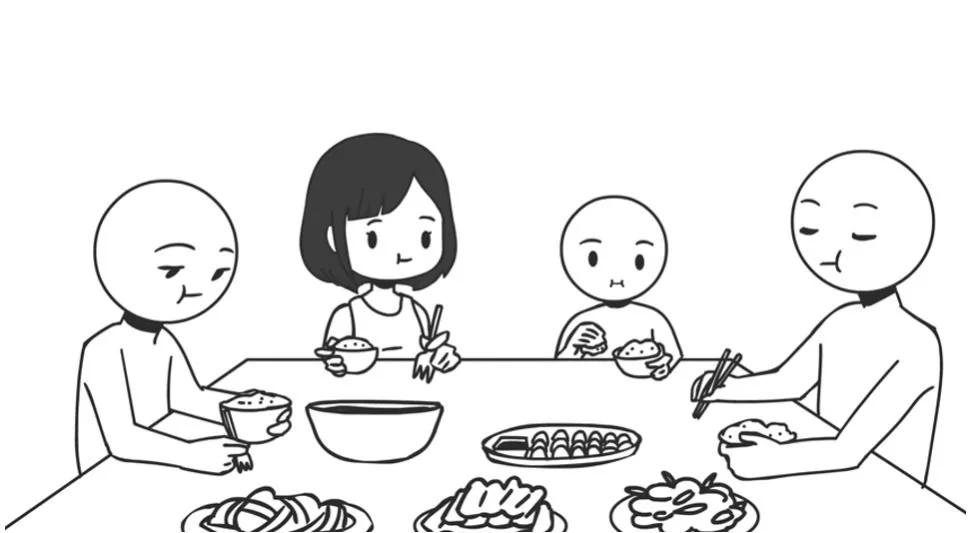
Domics is an Asian-American YouTuber who uses animations to tell stories about his life experiences and who he is as a person ³⁹. In this particular video, Domics talk with a group of his Asian-American friends as they discuss their unique childhood experiences growing up as first-generation children of Asian immigrants⁴⁰. They reflect on school memories with classmates, conversations with parents, and living as a minority in a country with a different predominant culture⁴¹. No matter how seemingly odd or disheartening some events might have been for them as they occured, Domics and his friends reflect fondly on their lives as immigrant children⁴².
-
Research shows that assimilation is not influenced by perceived ethnic competition, prejudice, or discrimination, but rather that cultural identification is shaped by the reaction to these experiences instead⁴³. For immigrant children like Domics and his friends, they did not internalize their unique customs and experiences as something to be ashamed about; nor did they internalize the microaggressions that occurred⁴⁴. Immigrant children who don’t internalize their negative experiences, and are able to process their discrimination, tend to be less ashamed about identifying as Asian-American, and use their life as a propellor for community solidarity⁴⁵. For instance, Domics and his friends recall using Kumon for school at their parent’s discretion, equating the amount of tutoring they signed up for as “going to school twice”⁴⁶. They also recall how the rule of “no shoes in the house” was second-nature to them, and expressed subsequent disgust at their friends who wore their shoes in their beds⁴⁷. Although they recall stress and feelings of inadequacy at the hands of parents and teachers, they reflect fondly of their experiences and characterize it as a core experience of their Asian-American childhoods⁴⁸.
-
Domics’ YouTube video exemplifies the benefits of bicultural socialization experienced between himself and his friends, as they adhere to elements of their traditional background while also attaining qualities of their host-society. This video highlights the forms of adherence and bicultural socialization present in The Big Sick, in which Kamil Nanjiani expresses disinterest in certain traditional expectations (such as an arranged marriage and practicing Islam) while also appreciating other aspects of his unique culture (such as the topics discussed during his stand-up comedy shows)⁴⁹. Although there tends to be a negative correlation between parenting style and cultural identification in second-generation immigrant children, both Domics and Nanjiani positively correlate their typical values as Asian immigrant children and their ethnic identity⁵⁰. Consequently, although the importance of bicultural socialization is not stressed as much as complete assimilation, these media objects show that a greater tendency towards traditional Asian cultural values is positively associated with overall better views towards immigrant children’s ethnic identity.
Domics reminisces and gives a visual representation of his family dinners at home⁴⁰
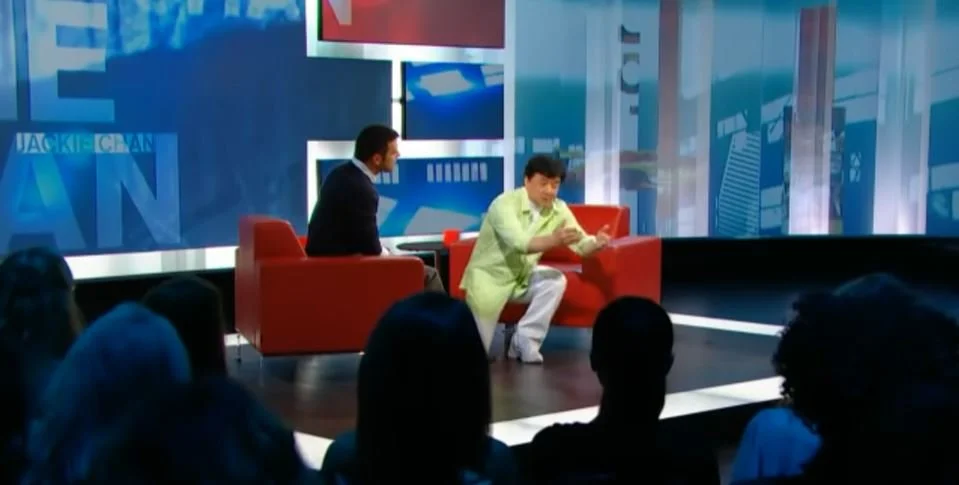
Interview with Jackie Chan
-
Jackie Chan is a Chinese American actor known for his extensive history in film and martial arts⁵¹. In this particular interview with George Stroumboulopoulos, Chan talks about his film career, his plans for the future, and his life growing up in China⁵². Chan discusses the differences in his upbringing to that of his American-born children⁵³. He expresses his wishes for them to adhere to traditional Chinese values and admits disappointment by the lack of traits that he would prefer for them to have⁵⁴.
-
When immigrant parents raise their children in countries with completely different child-rearing practices and ideologies, there are challenges that arise that can result in long-term malfunctioning of the whole family⁵⁵. For parents like Jackie Chan, who grew up in environments with a much stronger emphasis on certain values and traits, this can cause tension with their children due to the intergenerational dissonance present. This is exemplified by Chan’s description of his son, who he describes as lacking discipline and respect for himself as well as authority figures⁵⁶. For instance, he describes primary school teachers and parents freely smacking him and his peers whenever they were disobedient and mocks Western ideals for being able to sue people if the same were to occur elsewhere⁵⁷. Among other things, he also states that his son does not greet him with a bow whenever he returns back home⁵⁸.
-
This interview showcases how intergenerational cultural dissonance can be present from the perspective of the immigrant parent, who may view their children as privileged, ignorant, and lazy. This interview highlights the relationship between Kamil Nanjiani and his parents, who believe that he cannot meet the already lowered, basic expectations that they have for him⁵⁹. Both Chan and Nanjiani’s parents express disappointment and frustration by their children’s lack of adherence to their traditional values and customs. They attribute United States schools, mass media, and popular culture to their children’s apparent disrespect towards the culture and tradition that makes them strong and unique.
Jackie Chan demonstrates how he would bow to his own father as a child in China⁵⁴.

Crazy Rich Asians
-
Crazy Rich Asians follows Rachel, a native New Yorker who works at New York University as a professor of economics⁶⁰. She travels with her boyfriend, Nick, to Singapore so that they can go to his best friend’s wedding⁶¹. While in Singapore, Nick plans to propose to Rachel at the dismay of his mother, who believes that she will never be good enough for her son or their family due to their extreme wealth and her status as a commoner in comparison⁶².
-
Asian-American children, such as Nick, may have difficulty reconciling their parents' cultural customs with their own beliefs, leading to conflict between them. In the movie, Eleanor's parenting style, which follows Confucian principles often used by Chinese immigrant parents to encourage hard work, has been found to be unpopular with many adolescents, causing tension between Asian immigrant parents and their children⁶³. This is exemplified by her relationship with Nick – who refuses to prioritize his family’s image of extreme wealth for the sake of not being able to marry Rachel, who his family views as a commoner⁶⁴. Chinese mothers also often rely on strictness and discipline in their parenting, as they believe these methods are necessary for their children to behave properly⁶⁵. This can be seen in Eleanor’s actions throughout the majority of the film, and most notably when she refuses to give Nick her emerald ring. This is significant because it is a customary practice in Chinese culture for a mother to give her son her engagement ring, so that the son may give it to the woman that he would also like to propose to⁶⁶.
-
This movie exemplifies how differential acculturation between parent and child can contribute to intergenerational conflict⁶⁷. Due to Asian immigrant parents’ tendency to use social comparisons as a means for correcting their children’s misbehaviors, they children can resent them if in the dominant culture that form of parenting is almost nowhere to be found with their peers⁶⁸. This is similar to The Big Sick since Kumail Nanjiani’s character faces tension with his parents over their relatively aggressive parenting regarding his dating and marriage prospects⁶⁹. Both parents attribute their children’s perceived disobedience to US culture and customs, and negative influences that are harmful to their cultural practices. However, by the end of both films, both parents prioritize their children’s happiness at the expense of their own preferred versions of adherence⁷⁰.
Nick introduces Rachel to Eleanor at an event in Singapore⁶².
⁶⁰
Conclusion
My digital exhibit explores the relationship between immigrant parents and their children; specifically focusing on how varying degrees of assimilation and adherence to traditional values, in comparison to the dominant culture of host-society, can consequently affect their bond. Research shows that adherence to values of collectivism and humility inherent in Asian cultural values positively correlated with higher perceived competence and functional values amongst second-generation Asian-Americans⁷¹. Further, although there tends to be a negative correlation between parenting style and cultural identification in second-generation immigrant children, there is a positive correlation between the typical values of Asian cultures and perceived competence in children⁷². Research also posits that adhering to cultural values (enculturation) plays a role in developing a positive self-concept for Asian-Americans since enculturation reflects group belonging and is associated with lower levels of race-related stress⁷³. Current studies in academia also suggest that higher ethnic identity development is associated with higher levels of life quality and satisfaction and can even affect personal psychology to the point of altering one’s worldview of racism and discrimination itself⁷⁴. Consequently, although the importance of bicultural socialization is not stressed as much as complete assimilation, a greater tendency towards traditional Asian cultural values is positively associated with overall better views towards immigrant children’s identity and wellbeing overall⁷⁵. My digital exhibit builds upon my thesis and conclusion by providing a perspective towards parent-child relationships, exemplifying how the benefits of bicultural socialization stem beyond immigrant children – positively affecting the whole family, and parent-child relationships, as well.
Notes
The Big Sick, created by Kumail Nanjiani (2017; United States). Theaters.
ibid
ibid
Encyclopædia Britannica, inc. (n.d.). Assimilation. Encyclopædia Britannica. Retrieved December 14, 2022, from https://www.britannica.com/topic/assimilation-society
Padilla , A. M. (2004, September 17). DEVELOPMENTAL PROCESSES RELATED TO INTERGENERATIONAL TRANSMISSION OF CULTURE: GROWING UP WITH TWO CULTURES IN THE UNITED STATES. Stanford University. Retrieved December 14, 2022, from https://web.stanford.edu/~apadilla/IntergenerationTransmissionofCulture.pdf
ibid
Yao, E. L. (1985). adjustment needs of Asian immigrant children. Elementary School Guidance & Counseling, 19(3), 222–227. http://www.jstor.org/stable/42868677
ibid
Xia, Yan Ruth, Kieu Anh Do, and Xiaolin Xie. “The Adjustment of Asian American Families to the U.S. Context: The Ecology of Strengths and Stress.” DigitalCommons@University of Nebraska - Lincoln. Faculty Publications, Department of Child, Youth, and Family Studies, 2013.
Never Have I Ever, directed by Mindy Kaling (2020; United States). Netflix
Vuong, D. K. (2020, May 5). Let's talk about growing up Asian American. YouTube. Retrieved December 15, 2022, from https://www.youtube.com/watch?v=wUqInrGeaf4
Stroumboulopoulos G. (2012, September 21). Jackie Chan on George Stroumboulopoulos Tonight: Extended interview. YouTube. Retrieved December 15, 2022, from https://www.youtube.com/watch?v=2qbi4wNefo0
Iwamoto, Derek Kenji, and William Ming Liu. “The Impact of Racial Identity, Ethnic Identity, Asian Values and Race-Related Stress on Asian Americans and Asian International College Students' Psychological Well-Being.” Journal of counseling psychology. U.S. National Library of Medicine, January 2010. https://www.ncbi.nlm.nih.gov/pmc/articles/PMC2854415/.
ibid
Patriot Act, created by Hasan Minhaj (2018; United States). Netflix
Sun, R. (2022). Jon M. Chu. The Hollywood Reporter. photograph, The Hollywood Reporter. Retrieved from https://www.hollywoodreporter.com/business/business-news/jon-m-chu-joins-weee-1235088000/.
ibid
ibid
ibid
ibid
ibid
ibid
Holohan, Siobhan. “Border Studies: Cultural Assimilation.” Everett I.L. Baker Library. Norwalk Community College Library, 2012. https://norwalkcc.libguides.com/c.php?g=572609&p=3998124.
ibid
ibid
ibid
ibid
ibid
ibid
ibid
ibid
ibid
ibid
ibid
ibid
ibid
ibid
ibid
DOMICS. (2018, July 1). Growing up Asian. YouTube. Retrieved December 15, 2022, from https://www.youtube.com/watch?v=lHdUFJCkAfQ
ibid
ibid
ibid
Cheah, Charissa S., Christy Y. Leung, and Nan Zhou. “Understanding ‘Tiger Parenting’ through the Perceptions of Chinese Immigrant Mothers: Can Chinese and U.S. Parenting Coexist?” Asian American Journal of Psychology 4, no. 1 (2013): 30–40. https://doi.org/10.1037/a0031217.
ibid
ibid
ibid
ibid
ibid
ibid
Yim, Eunice Pui-Yu. “Effects of Asian Cultural Values on Parenting Style and Young Children’s Perceived Competence: A Cross-Sectional Study.” Frontiers in Psychology 13 (October 17, 2022). https://doi.org/10.3389/fpsyg.2022.905093.
ibid
ibid
ibid
ibid
ibid
ibid
ibid
ibid
ibid
Crazy Rich Asians, adapted from Kevin Kwan (2018; United States). Theaters
ibid
ibid
ibid
ibid
ibid
ibid
ibid
ibid
ibid
ibid
ibid
ibid
Shankar, Shalini. “Asian American Youth Language Use: Perspectives across Schools and ...” SAGEJournals. SAGE Publishing, March 1, 2011. https://journals.sagepub.com/doi/10.3102/0091732X10383213.
ibid
ibid